This week’s webinar focused on companies that have been opened throughout the pandemic, those that are getting ready to open and those that are fighting to increase the allowable guest counts in their markets.
You can listen to this webinar HERE
Please contact us for the slide deck if you are interested in learning more about this webinar topic.
]]>This week’s webinar focused on actual reopening case studies from around the United States. Some companies opened in Phase 1 and others in advanced phases.
You can listen to this webinar HERE
Please contact us for the slide deck if you are interested in learning more about this webinar topic.
]]>This week’s webinar shared best practices across multiple industries to help catering operations create safe and manageable work environments.
You can listen to this webinar HERE
Please contact us for the slide deck if you are interested in learning more about this webinar topic.
]]>This week’s webinar focused on insurance concerns to protect employees and your organization as the economy gets back to work.
You can listen to this webinar HERE
Please contact us for the slide deck if you are interested in learning more about this webinar topic.
]]>This week’s webinar focused on getting your catering business ready to reopen as state restrictions started to enter Phase 1 and 2.
You can listen to this webinar HERE
Please contact us for the slide deck if you are interested in learning more about this webinar topic.
]]>This week’s webinar focused on contracts and the changes the Covid-19 Pandemic will have on the existing and new contracts in the catering and special event industry.
Thank you to Albert Nicaud, Attorney at Law, Nicaud and Sunseri Law Firm.
You can listen to this webinar HERE
Please contact us for the slide deck if you are interested in learning more about this webinar topic.
]]>
COVID-19 Webinar Series: Press the Restart Button on Your Business
Francisco Christian, Taylored Hospitality Solutions and Roy Porter, Engage Works, Inc.
You can listen to this webinar HERE
Please contact us for the slide deck if you are interested in learning more about this webinar topic.
]]>COVID-19 Webinar Series: Leading Through Ambiguity
Francisco Christian, Taylored Hospitality Solutions, LLC, Greg Karl, Red Quill Hospitality Solutions and Clint Elkins, SB Value
You can listen to this webinar HERE
Please contact us for the slide deck if you are interested in learning more about this webinar topic.
]]> Is anyone else exhausted? Whew, what a holiday season that just passed! There was laughter, there were tears, there was stress and there were client cheers. If you are like the rest of the (food service / catering) industry, the month of December came hard and fast, “thanks” due to a compressed calendar that normally gives us three weekends to space out company celebrations and end of year employee morale events. This year, we had to do it all in two.
With annual sales goals and year end incentives within reach; sales managers say yes and operations begrudgingly says yes to every last-minute call. No choice. No time to make it up, so let’s get it done…somehow! Sales is psyched, but your Director of Operations lives in a different world. Like this one:
2 am – Call from the kitchen wakes you up, “Sysco/US Foods is here. They can’t unload because the last event truck that unloaded their food about an hour ago is blocking the loading area and the keys must have gone home with the supervisor. What should we do?”
4 am – Call from the warehouse morning shift supervisor, “The 6am truck is out of gas and we don’t have anyone scheduled to that can drive a manual transmission until 6am. Also, the truck is parked with the liftgate against the building so we can’t get the food and beverage on the truck. Any ideas?”
5 am – Heading to the warehouse since there is no use going back to sleep.
6 am – Finally the staff person that took the keys home answers their phone but they aren’t scheduled until 3pm. “Can someone come by my house and I’ll leave the keys in the mailbox? Sorry”
7 am – The 6 am truck is getting ready to leave but all the food and equipment aren’t going to fit because the pile of decor that was pulled overnight after the warehouse left is overwhelming the truck. Send a warehouse driver in a second truck to drop the extra items and get them back before they have to leave on an 830 am food delivery.
8 am – 4 trucks all leaving at the same time for noon events. Every supervisor shows up and asks “What event am I scheduled on and can I get a couple extra carts?”
9 am – Finally all four 8 am trucks are leaving the dock. Why are this ice chest and Cambro with food still sitting here? Too bad these items each go to a different party. Guess we need to start our Troubleshooting Drive Schedule. Once the Supervisors know if they need anything else at event site, we can send these items on 2 different trucks.
1030 am – No answers from the Supervisors so time to call and see if they have identified any missing items. We have 30 minutes to get any missing items on trucks and get them on the road for your event start time.
1115 am – Troubleshooting trucks roll out as the noon warehouse shift comes in to unload and turn last night’s trucks for 3 pm leave times. The dish room is overloaded from the prep kitchen and last night’s events. What gets priority to be cleaned? All of it.
High Noon – Rinse and Repeat for the afternoon events.
If you are like me, just reading through that series of events gives you a rush of adrenaline or high anxiety. By the time the day ends, most staff are just licking their wounds and moving on to the next day. This is where Post Event Analysis becomes most important. Does your company take time to relive the good, the bad and the ugly in order to be better next time around? Most companies’ response to this question is “No, there is no time.”
Here are some tips to review and start a Post Event Analysis program of your own.
#1 – Keep a troubleshooting log for every item that gets called in and added or delivered to an event. This troubleshooting log should be emailed out every morning for the previous day. This will help remind sales what needs to be billed to clients, the kitchen can work on expediting training issues, staffing can manage onsite training to reduce the extra calls for equipment and the warehouse can work on overall logistics and routing. This is not a finger pointing exercise but facts for improvement.
#2 – Drive Schedules for each day should be completed and shared with every department. This allows for a single snapshot of where all the assets will be around your service area. Some companies use alphanumeric and others use numeric labeling to keep track of what goes where. Warehouse operations will usually assign each event a truck number so keys, event phones and supervisor boards can be matched up. At a quick glance, the warehouse team can figure out if what one party is calling for might be closer to grab from another event rather than coming from the warehouse.
#3 – Event Evaluation Forms should go out to every event. These evaluation forms should cover the basics about the party for client and sales review. However, operations needs to know if the truck left on time, was the troubleshooting kit on the truck and ready for use, did the truck have enough gas, were there any issues with the truck that need to be dealt with before it goes out again, was there enough room to get everything back, and so on. These forms can contain the most important information for your post event analysis.
#4 Finally and the most important step is to host a December wrap up meeting. This should be scheduled on a slow day in January when there are no event distractions. Every department should be invited and asked to bring with them a single process or issue that they believe can be fixed. This meeting can quickly turn into a finger pointing or blame session so someone will need to help maintain the positive outlook of the meeting. Some companies will review each event evaluation, others the troubleshooting log and some will just walk through each day. You will want to keep track of the number of support opportunities that arose. Example. On Thursday in December, we have pick up the rental trucks, so plan to have 5 drivers available at 3 pm to go on a truck run.
All of these steps can help you build a Post Event Analysis process for your company. If you take the time when everyone is calm and can work through communication changes, the company as a whole will benefit.. By including all departments in the workflow changes, employees will take ownership next time they see a challenge..
Finally, when gathering the team to relive the past, start with what everyone forgot in December…Please and Thank You!
See you on the dock!
]]>If you are like most companies that have a sales cycle throughout your year, there is usually a sigh of relief at the end of one season and a thought that there is plenty of time before it picks up again. This is the time to take a quick break and get right back at it from an operational standpoint. Believe it or not, in as little as 1-3 hours per week, you can take your lessons learned and turn them into better efficient processes for the future.
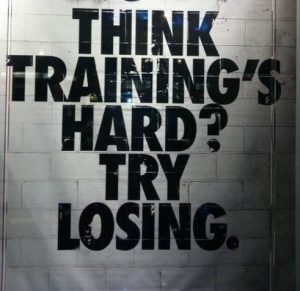
When I start to work with clients, they feel that taking the time to learn from mistakes and improve is too time consuming. How could they possibly get everyone that needs to be in the meeting together, there is just no time. This is the classic mistake. Kaizen (改善) is the Sino-Japanese word for “improvement”. In business, kaizen refers to activities that continually improve all functions and involves all employees from the CEO to the assembly line workers. Our industry tends to think these techniques are reserved for major corporations and multi-million dollar conglomerates. In fact, the smaller size of most of the companies in the industry makes this process even easier once started in the company. Consider these scenarios:
Eliminating extra runs to events
Most companies believe they have a foolproof operations process for their events. When they dig into the overall Event Lifecycle, companies learn more about their flaws. One client of mine gathered their operations team and asked a simple question to each of the 6 people at the table. “Tell me how you pack out an event?” The client was surprised to hear 6 different methods from the team. We worked with the team to simplify the process and even add in a double check from another teammate once equipment was loaded on the truck.
Learning and Improving
We all use the saying “learn from your mistakes” probably daily. How many of us actually take the time to add in the learning component? Over the years, at Picnic People in San Diego, we tried various methods of taking the mistakes and making those continuous improvements. At times we had the Operations Managers join the sales team for feedback, other times we held department head meetings to share feedback from all the departments, and we even tried bringing in the event supervisors to give us their version at monthly events. There is no secret sauce to solicit feedback, anyone that works for you will give it to you if you ask. The secret sauce is actually taking that feedback, discussing with the decision makers and implementing the changes to prevent the issue from happening again. Believe it or not, this should not take more than the initial meeting, maybe some follow up within 24-48 hours and then a couple hours to train the new process. Ask any successful company in the world why they stay on top, its because they are not afraid to make mistakes and have a plan to learn from them.
Document, Implement, Train…Repeat
When companies first start to implement a continuous improvement program and understand their Event Lifecycle, their success is measured by the degree that they have a pig headed stubborn attitude to not make previous mistakes again. Anyone can talk about what they should do to prevent repeating the past, the successful companies show their employees how to not repeat. Ask yourself if you have a single written procedure for one business process in your company. Good, now use that written documentation to train every new employee that comes in contact with the process so the process happens the same way every time. Imagine if you will that today’s employee is out sick in 3 days when the process needs to happen again. Will a co-worker be able to explain how and why the process needs to happen a certain way? The answer should always be “YES and here is a training piece to show you why and how we do it this way.”
These are just a few examples of thoughts that should be given to the operations side of the business whenever an owner has time to come up for air. Management teams should learn to embrace mistakes as support/training opportunities. One client of mine used to not let the management team leave the weekly meeting until they all decided on the new process, the documentation and who would do the training. One item a week might be the best start. Do you have 52 items on your business strategic plan list that you wish you could fix? Why not start with one and see how it goes. Feel free to share your thoughts or questions at [email protected]
See you on the dock!
]]>